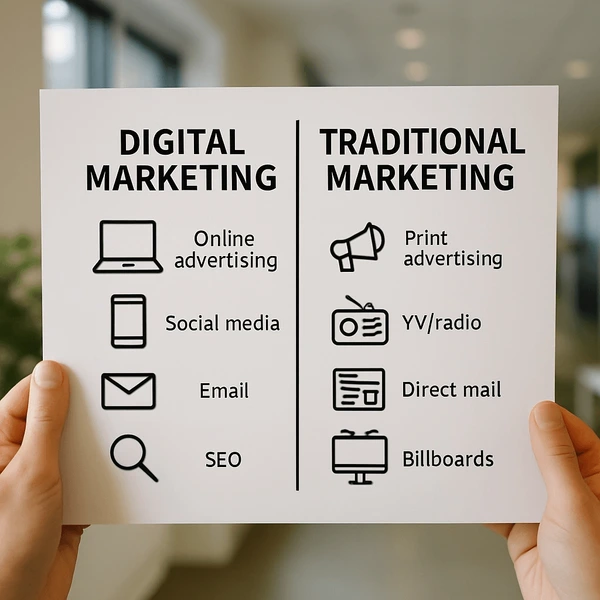
Digital Marketing vs Traditional Marketing: A Theoretical and Strategic Comparison
Marketing has always served as a vital link between businesses and their customers. Yet, the way this connection is formed has evolved significantly over the years. When we compare digital marketing to traditional marketing, it’s not just a simple case of old versus new; it highlights a profound shift in how we communicate, how consumers behave, how technology is integrated, and how we measure success.
Traditional marketing encompasses the classic promotional strategies that were prevalent before the internet and digital platforms took over. This includes TV commercials, radio spots, print media like newspapers and magazines, billboards, direct mail, and promotions at physical events. These methods typically follow a one-way communication model, where businesses send out messages to a wide audience with minimal interaction or feedback.
In contrast, digital marketing represents a modern, tech-savvy evolution of marketing strategies. It leverages online platforms such as search engines, social media, websites, email, mobile apps, and online ad networks to connect with specific audiences. Unlike traditional marketing, digital marketing thrives on interactivity, data collection, real-time analytics, and measurable results.
The key distinction between digital and traditional marketing lies in how communication occurs and how we measure it. Traditional marketing often interrupts the audience's experience. A TV ad cuts into a show, a radio spot breaks into a broadcast, and a billboard grabs attention while driving. The reach is usually broad and general, aiming to raise awareness among as many people as possible. However, tracking precise engagement, behavioral responses, or conversions tends to be indirect and somewhat vague.